

SEO Metadata (Copy these into your SEO Plugin)
August 1, 2026
AI Recommendations in Agriculture Cause Crop Loss on 100 Dunams in China
August 17, 2026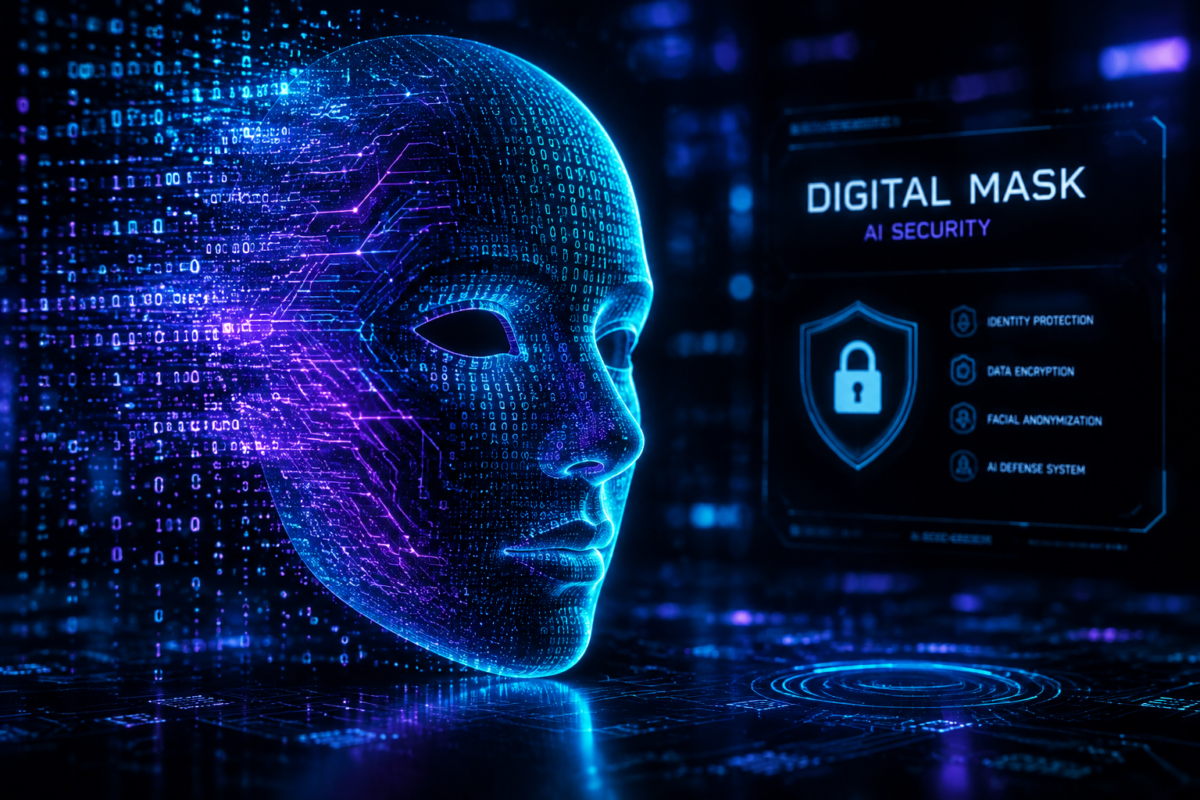
Digital Masking and AI have emerged as one of the most dangerous challenges facing users and organizations in the realm of cybersecurity. Cyberattacks are no longer limited to exploiting software vulnerabilities; they now weaponize personal data, voices, and faces to deceive victims.
Attackers are now leveraging deepfake technologies to create highly realistic digital replicas capable of mimicking faces, voices, and conversational patterns. This evolution makes fraud much more convincing and significantly harder to detect.
What is Digital Masking and AI?
The concept of Digital Masking and AI refers to the construction of a fraudulent identity that mimics a real person using data available online. This data often includes personal photos, video clips, voice recordings, and public social media activity.
Hackers aggregate this information to build what can be described as an “Intelligence Fingerprint” of the victim. Subsequently, AI tools utilize this data to generate forged audio or video content used for scams or identity theft.
How Hackers Use Deepfakes
Users might receive a voice call that sounds exactly like a family member, or a video message from a manager at work requesting a wire transfer or a verification code. In many instances, the audio and video are entirely AI-generated.
These attacks rely on social engineering—exploiting trust, fear, and urgency to pressure victims into making impulsive decisions. Therefore, one should never share passwords, verification codes, or financial data based solely on a voice call or message.
Why Digital Masking is a Cyber Threat
The danger of Digital Masking and AI lies in how it undermines the traditional reliance on audio and visual confirmation as proof of identity. Users may see a familiar face or hear a known voice, but in reality, they are engaging with forged content designed to deceive them.
Furthermore, these tactics target corporations by mimicking the voices of CEOs or authorized personnel. This can lead to unauthorized financial transfers, sensitive information leaks, or granting attackers dangerous internal system privileges.
Protecting Yourself from Digital Masking Attacks
Cybersecurity experts advise against oversharing long voice recordings or high-definition videos on public accounts. It is also recommended to review privacy settings and limit the amount of personal information available to the public.
When receiving an urgent request for funds or sensitive codes, always reach out to the person through an independent, trusted channel. Families can also adopt a “secret word” or private verification question for emergency situations.
Protecting Organizations
Organizations must implement a Zero Trust principle, where no sensitive request is accepted without multi-level verification. This includes email verification, dual authorization, and clear financial protocols.
Employees should also be trained to recognize phishing attempts, fake calls, and social engineering tactics. For further guidance, you can refer to resources such as Microsoft Security.
Ultimately, awareness of the risks associated with Digital Masking and AI has become a fundamental necessity. Verifying the identity of the other party before sharing information or executing sensitive requests is the first line of defense against modern digital fraud.
